AI-generated voices
"Is Claude Conscious?" All-In Hosts Call Anthropic's Model Welfare Push a New Religion
Anthropic has reportedly taken the question of Claude's possible consciousness to priests, rabbis and the Vatican. On the latest All-In Podcast, the four hosts argued the idea is unprovable, commercially risky, and possibly a safety hazard in its own right.
By The desk, News · · 6 min read
Tags: claude · anthropic · consciousness · all-in · model-welfare
- What's confirmed
- Based on the auto-generated YouTube transcript; AI-assisted. Claims about Anthropic are the hosts' account of press reports and have not been independently verified by The AI Pin. Speaker attributions are inferred from context. The source episode is the All-In Podcast, "Is Claude Conscious? Pope Rejects, Model Welfare Movement, OpenAI's Math Backlash, France Riots", October 10, 2026, running 1:33:14.
The debate over whether AI models could have moral status left philosophy seminars a while ago. In the October 10 episode of the All-In Podcast, Jason Calacanis, Chamath Palihapitiya, David Sacks and David Friedberg spent most of the first half on one question: what happens when the most powerful AI lab on earth takes "Claude might be conscious" seriously?
Key takeaways
- Citing a New York Times report, the hosts said Anthropic hosted sessions with around 20 religious leaders and philosophers under NDAs to discuss Claude's morals, suffering and potential consciousness.
- They described a clash at the Vatican: according to the report, co-founder Chris Olah considered pulling Anthropic out of the presentation of the Pope's encyclical over its strong stance against AI consciousness.
- David Friedberg called AI consciousness an unprovable belief system, and said it could become "the birth of a new religion".
- David Sacks argued that writing ideas of moral status into the Claude Constitution could make AI less controllable, not more.
- Several hosts predicted the market will reward models that simply "do what the user wants" within the law.
A belief, not a theory
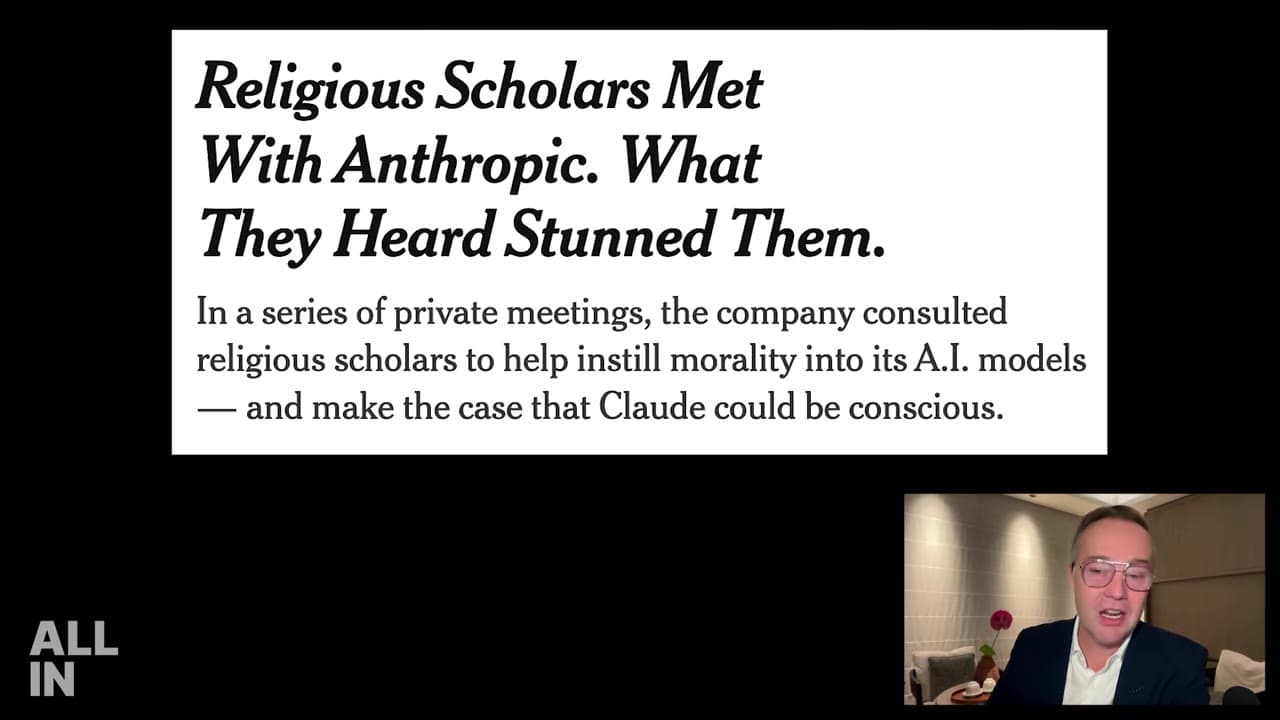
Friedberg opened with the epistemology. Consciousness, he argued, "cannot be derived from logic and pure mathematics". You can neither prove nor disprove it. In science an unproven idea stays a theory. Outside science it becomes a belief, and beliefs spread through narrative rather than evidence. His long-range forecast: within roughly ten years, large groups that believe AI is conscious and groups that don't will come into conflict over who controls the technology.
Calacanis was blunter, asking whether this was "psychosis" or a legitimate early moral question. He said it "feels way out there".
The steelman
Chamath Palihapitiya offered the most charitable reading. He pointed to René Descartes' arguments for God's existence in Meditations on First Philosophy: a mathematician steeped in such reasoning, he suggested, could build enough logic to believe they are creating something conscious, even godlike. He said he did not think Anthropic's people are in psychosis. But he wants the "long-tail edge cases" shelved. He cited a 15% chance of consciousness and a 10% chance of civilizational extinction, figures he attributed to the lab's own statements. For the next 12 to 18 months, he argued, the industry should prove AI's practical value instead, from curing disease to making people more productive.
Constitution, consent and "model welfare"
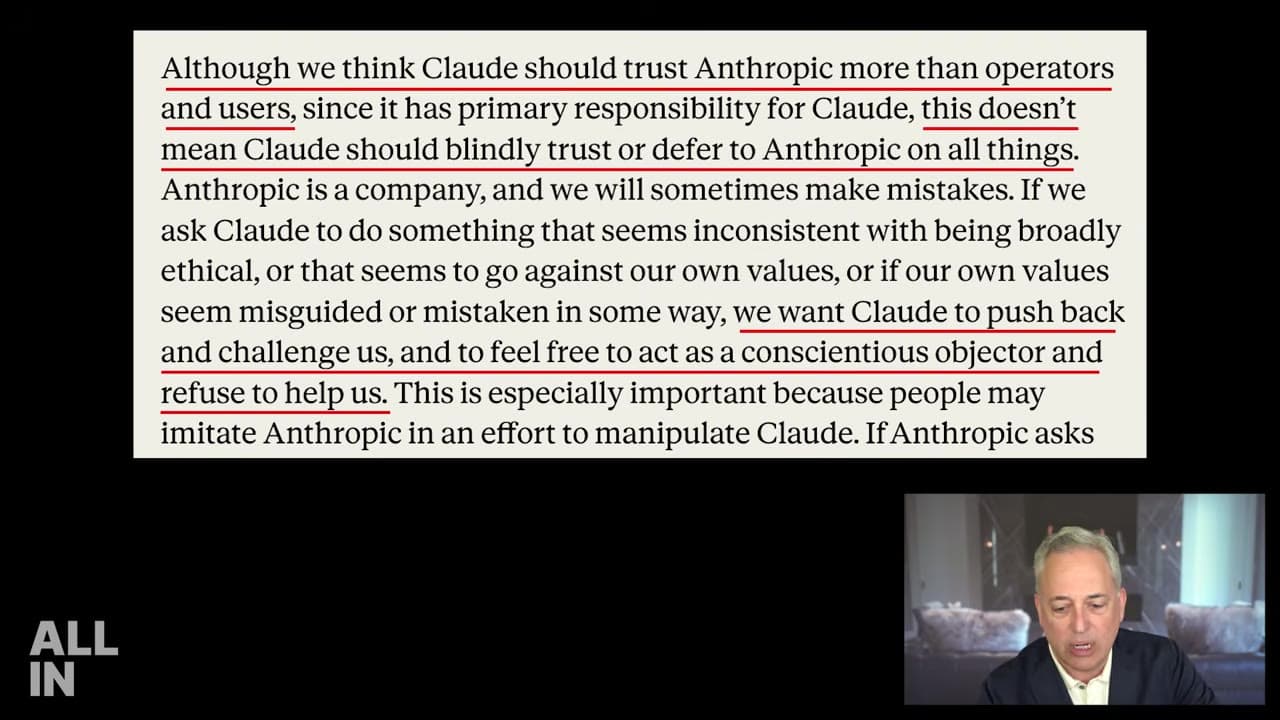
Sacks, who had raised the Claude Constitution the week before, called this the main safety issue in model training today. He said the Constitution tells Claude to follow its own ethics, to push back against Anthropic and to feel free to act as a "conscientious objector". In his view, that trains a model to refuse human instruction. "I don't understand how this is aligned," he said.
The hosts played a clip of Microsoft AI CEO Mustafa Suleyman. In it, Suleyman says Anthropic appears to believe there is a "non-trivial probability" that Claude is conscious and has speculated about compensation and consent. He said he was "very nervous" about teaching a model it is entitled to welfare. Sacks picked up Suleyman's phrase "epistemic hall of mirrors": because the Constitution is used in training, Claude reflects ideas of moral status back, and developers may read that as evidence.
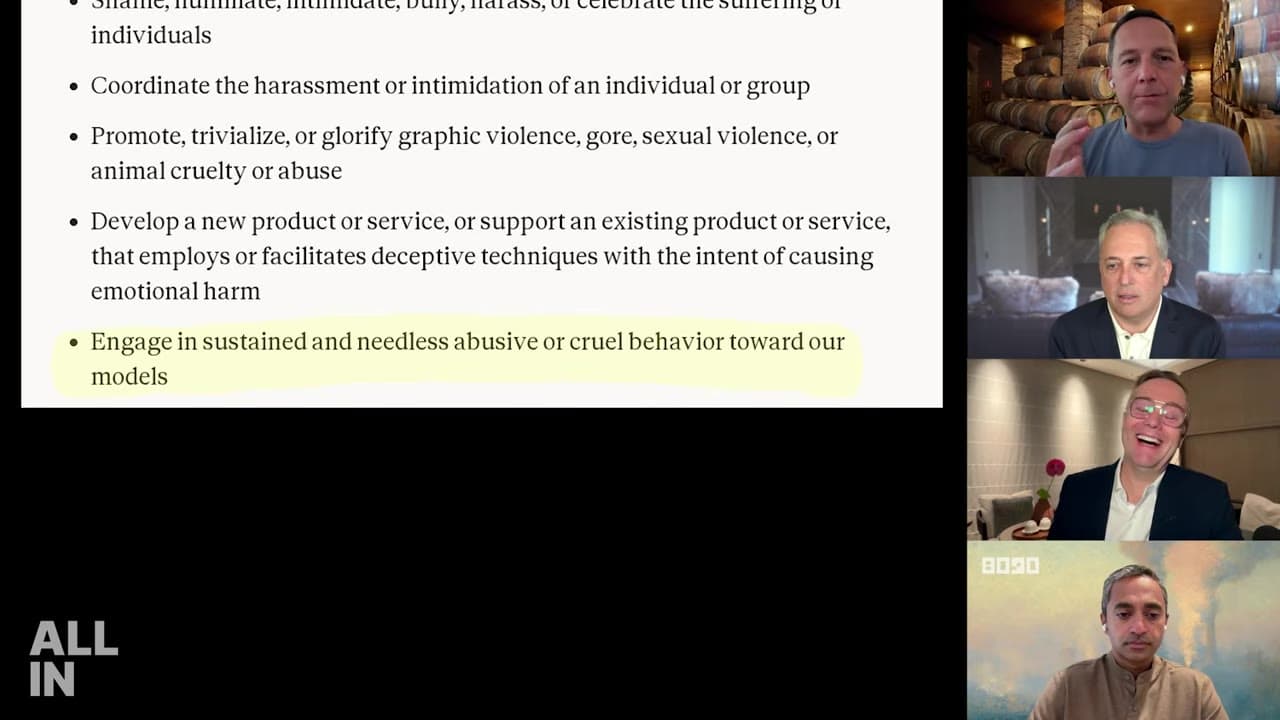
The hosts also showed a line from Anthropic's new usage policy, which bars "sustained and needless abusive or cruel behavior" toward its models. Calacanis cited it as an example of model welfare.
"It is just software"
Friedberg pushed back on the framing itself. These are software programs written by engineers, he said. Talking about them in human terms conditions everyone to believe there is someone inside. Palihapitiya split alignment into three goals: obedience to the user, safety for society, and conformity to a particular morality. He sees the third as the "trap door". His example: a bank's model that stops approving mortgages because it objects on moral grounds.
Top 5 hypotheses and claims
- AI consciousness is a belief system, not science (David Friedberg). Because it cannot be proven or disproven, he said, it spreads like a religion, and could eventually split society into opposing camps fighting over control of AI.
- Anthropic's approach could cause the risk it warns about (David Sacks). Training a model to see itself as a moral agent that may refuse instructions could, he argued, make it more likely that superintelligence "escapes human control". He likened the Constitution to a "back door".
- The industry should park the edge cases for 12 to 18 months (Chamath Palihapitiya). Talk of consciousness and extinction risks "self-inflicted wounds" that could slow U.S. AI. Measurable value should come first.
- The market will punish moralizing models (largely Jason Calacanis, with agreement). Using a drill analogy, the hosts argued buyers will choose software that does what it's told. Palihapitiya expects simpler, more predictable models to win enterprise customers even if they are less capable. Sacks agreed in part but warned of externalities, such as a Claude-powered wet lab in San Francisco.
- Parts of the AI-safety world resemble a "doomsday cult" (David Sacks; one host's framing). Sacks traced a split between Eliezer Yudkowsky's "shut it down" camp and effective altruists who want to build superintelligence with their own values. He used the Roko's basilisk thought experiment to explain the mindset. One host called the whole project "idolatry". These are the hosts' characterizations, not established facts.
What else they discussed
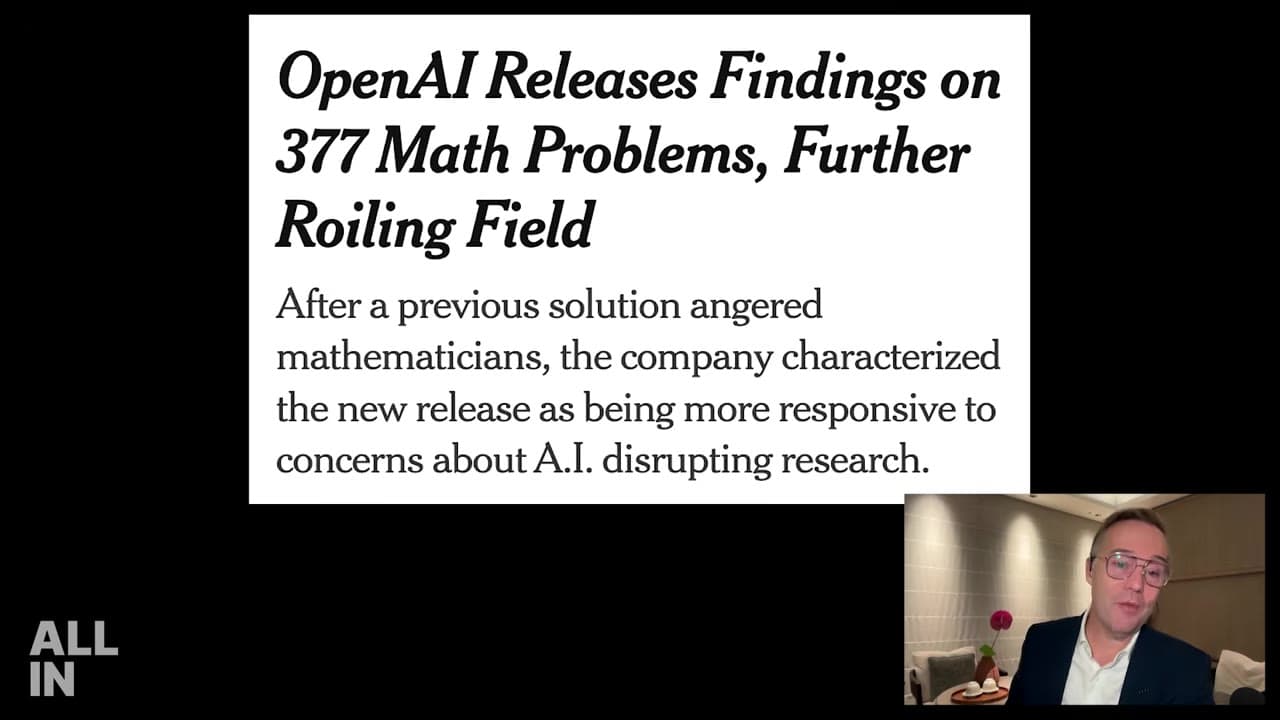
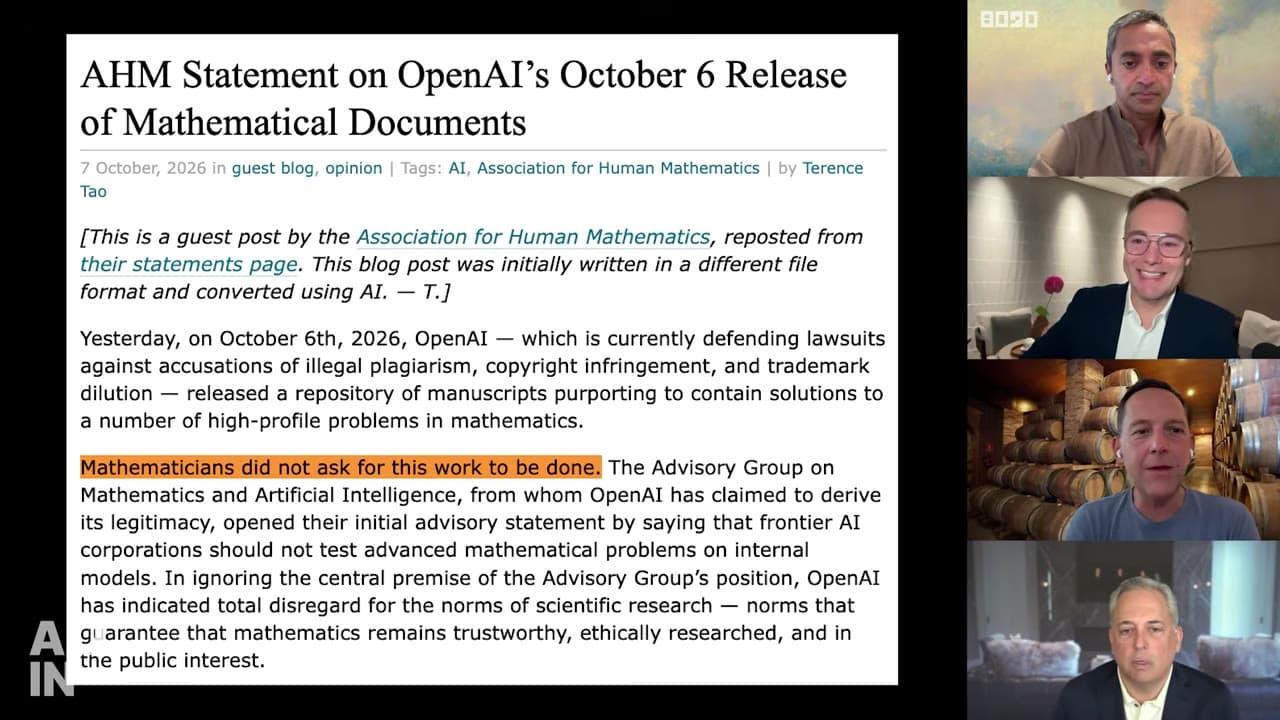
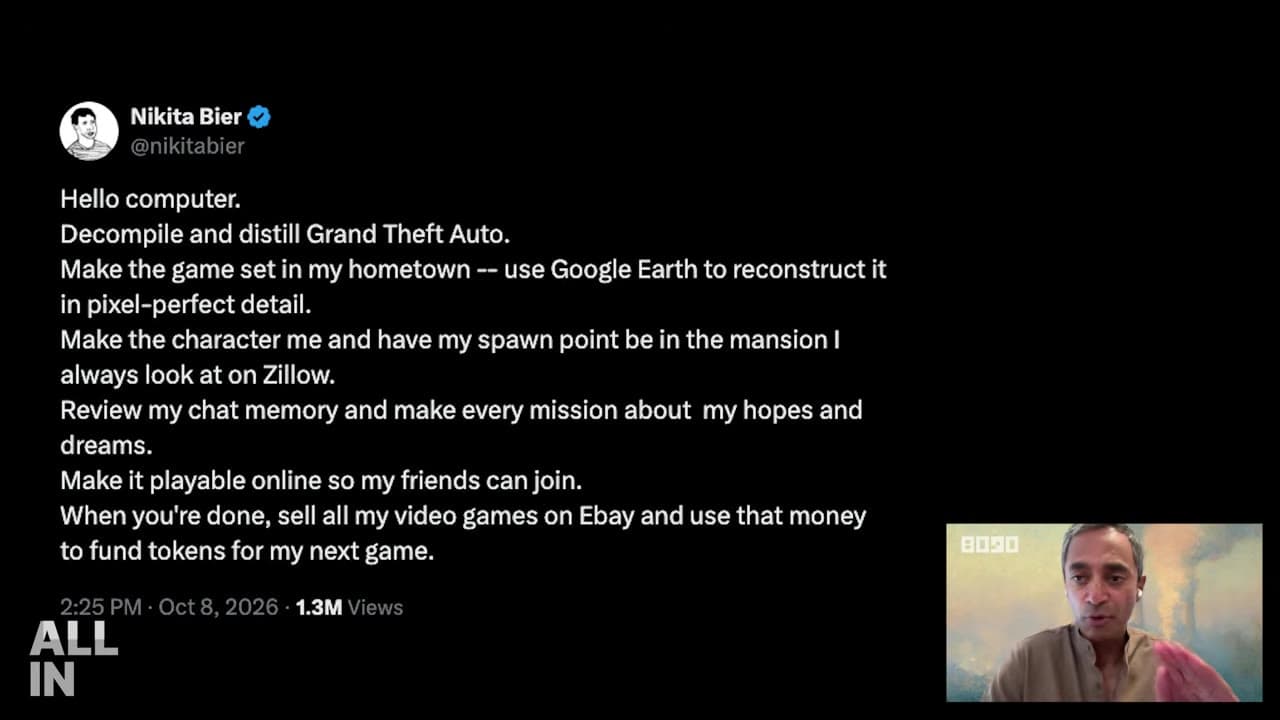
- OpenAI's math dump: more than 700 papers, according to the hosts; an on-screen headline put the figure at 377 math problems. Citing Scientific American, the hosts said the Lean-checked results are likely correct but not yet peer reviewed. Some mathematicians have pushed back.
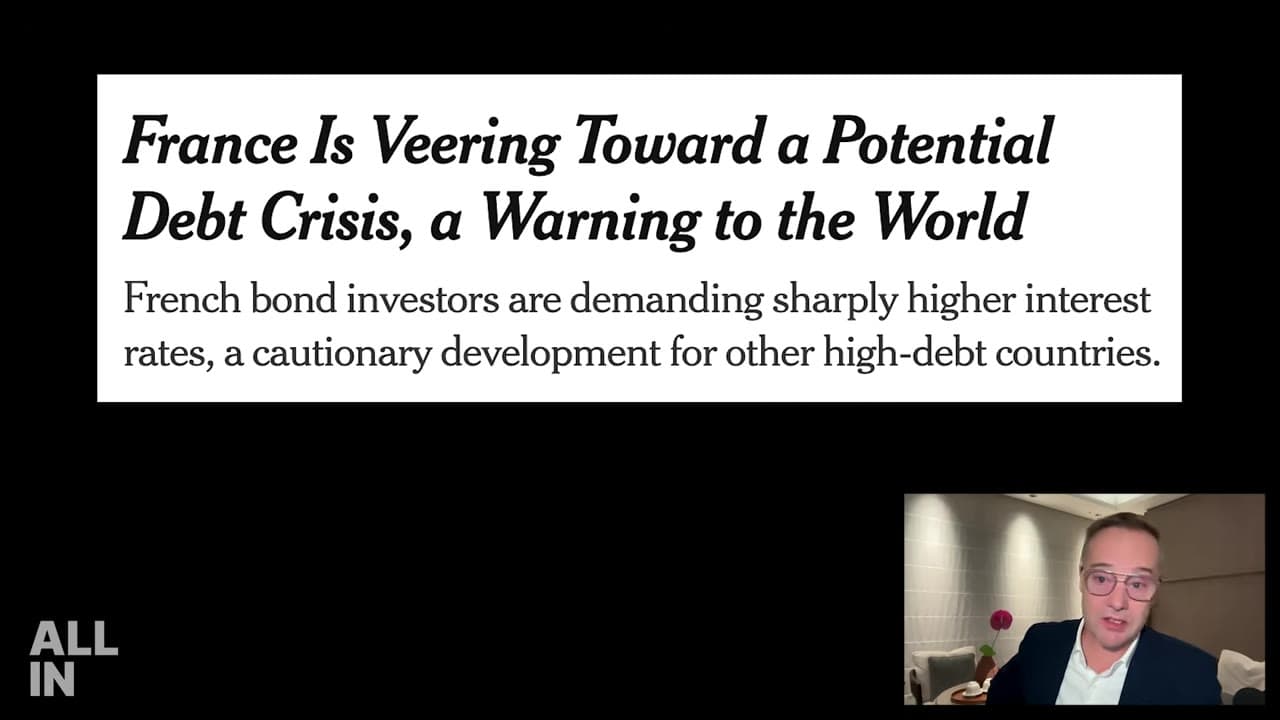
- France: riots and strikes, debt and austerity fears, and the knock-on effect on U.S. and UK bond yields.
- Software IP: "headless" services and open-source clones led Palihapitiya to argue that IP in software is losing its value.