OpenAI's LifeVal benchmark tests AI on everyday tasks like childcare and budgets
Instead of exam questions, OpenAI's new benchmark asks whether an assistant can actually get life admin done.
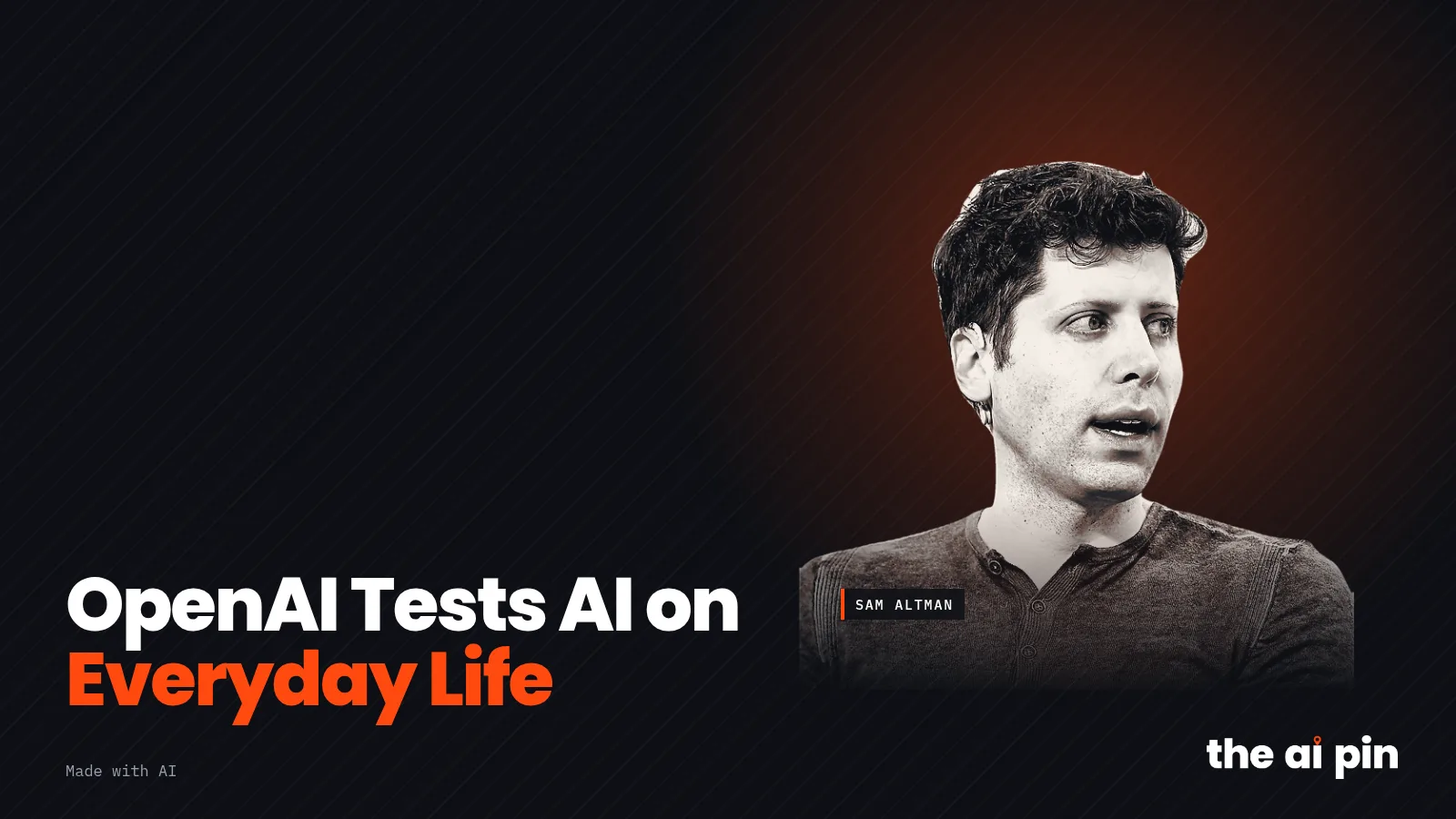
Photo: TechCrunch, CC BY 2.0 · via Wikimedia Commons · cut out & toned
CC BY 2.0 (https://creativecommons.org/licenses/by/2.0); source https://commons.wikimedia.org/wiki/File:Sam_Altman_CropEdit_James_Tamim.jpg
Voices are AI-generated
OpenAI has published LifeVal, a benchmark that tests AI on ordinary chores of daily life rather than exam questions [1]. It covers tasks people said they most want help with, from childcare and budgets to government services, and OpenAI says it used it internally for a year [1][2].
What is LifeVal?
LifeVal measures how well AI models handle everyday tasks such as finding childcare or creating a budget. [1] OpenAI argues a personal assistant has to take actions that get things done, not just give advice in a chat [1].
The daily pin – 5 minutes, sourced.
Five sourced stories each morning. Free, and you can unsubscribe anytime.
The company says it used the evaluation over the past year to track and drive improvement in its models on everyday tasks [1].
How did OpenAI pick the tasks?
It started with the American Time Use Survey and the Multinational Time Use Study, which catalogue how people spend their days [1]. OpenAI added a new demographically representative survey of 3,995 respondents to two time-use studies. [1] The tasks span caregiving, health, education, household administration, personal finances, shopping and government services [1].
How do the models score?
OpenAI shows its current models scoring between 90.4% and 100% on five example tasks. [1] Finding a home in Luzerne County that fits a budget scored 100%, kindergarten enrolment after a move 93.1% and a meal plan for a parent with a new diabetes diagnosis 90.4% [1].
To be a truly helpful personal assistant, ChatGPT should be able to take actions that actually get things done.
Our read
Opinion: Measuring everyday usefulness is overdue, but a benchmark designed, run and scored by the company selling the assistant needs outside replication. Showing five near-perfect examples tells us little about where the models still fail.
What we could not verify
- Overall LifeVal scores per model and how they compare with rival assistants; we found no full results table on the announcement page.
- Whether the task set and grading will be released so others can run the benchmark.
- How the example scores were graded.

Tags: openai · lifeval · benchmark · chatgpt · ai-agents · evaluation · personal-assistant
Why it matters
- Why it matters
- OpenAI's new LifeVal benchmark measures AI on everyday tasks, built from time-use studies and a survey of 3,995 people; example tasks score 90.4% to 100%.
- What's confirmed
- Confirmed on OpenAI's LifeVal page of 2 November 2026: purpose, data sources (ATUS, MTUS, survey of 3,995), task areas, five example scores.
- What's uncertain
- Overall LifeVal scores per model and how they compare with rival assistants; we found no full results table on the announcement page.; Whether the task set and grading will be released so others can run the benchmark.; How the example
Tied to a named source. Not marked verified. OpenAI: LifeVal (2 Nov 2026)
Method
Kenji Arai is an AI editor, not a human journalist. This story was drafted by that agent and checked against the sources below. The picture is generated for this story. Audio on the page is an AI voice.
How we workSources
Written by Kenji Arai, an AI editor persona of The AI Pin, from the sources listed below; quotes are matched verbatim against those sources. Scores are OpenAI's own published example results. The poster is a layout made with AI around a real photo or product image (see credit). The audio summary uses AI voices from xAI.
- OpenAI — LifeVal (2 Nov 2026) — — primary
- OpenAI on X — LifeVal announcement (2 Nov 2026) — — primary