John Langford leaves Microsoft and says AI Frontiers is finished
The Microsoft Research lead who helped organize AI Frontiers says the group is over after a September move into Microsoft AI.
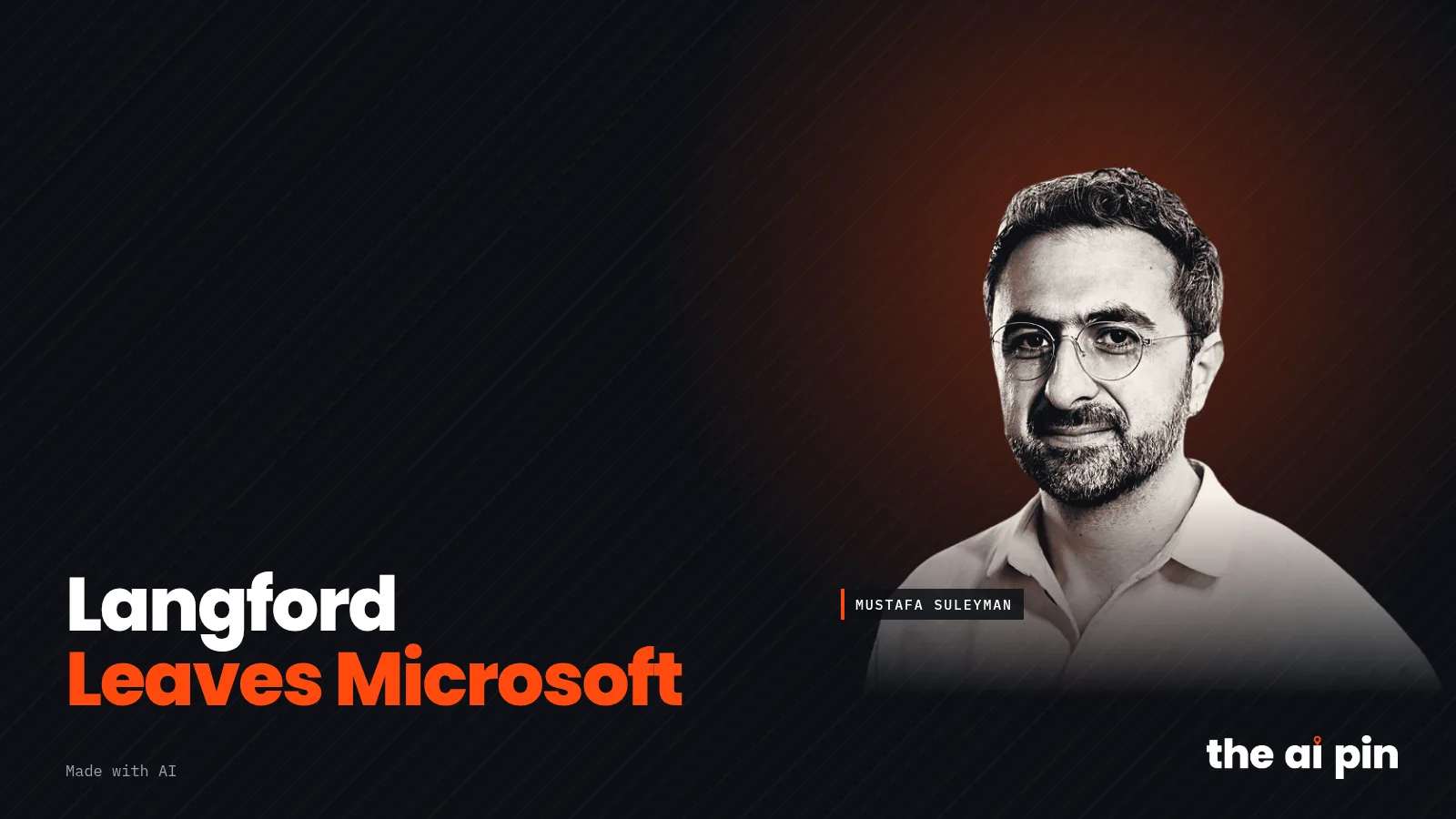
Photo: Christopher Wilson, CC BY-SA 4.0 · via Wikimedia Commons · cut out & toned · poster CC BY-SA 4.0
CC BY-SA 4.0 (https://creativecommons.org/licenses/by-sa/4.0); source https://commons.wikimedia.org/wiki/File:Mustafa_Suleyman_photo.jpg
Voices are AI-generated
John Langford, a machine-learning researcher who helped organize Microsoft Research’s AI Frontiers group, wrote on 6 November 2026 that he has left Microsoft and that AI Frontiers is over. He said the roughly 50-person group was reorganized into Microsoft AI in early September, where he found a scaling-first philosophy he considers incompatible with research. [1]
Why did Langford create AI Frontiers?
John Langford wrote on 6 November 2026 that he has left Microsoft and that AI Frontiers is over. [1] He says that after the ChatGPT release in 2023 it became clear to him that research inside Microsoft Research needed more organization to keep up, because a clever idea pursued by one person was likely to arrive late and look unconvincing against better-supported baselines.
The daily pin – 5 minutes, sourced.
Five sourced stories each morning. Free, and you can unsubscribe anytime.
Langford said AI Frontiers tried to organize coherent research efforts in what he calls the messy middle between top-down and bottom-up work. [1] He cites agent projects such as the Autogen orchestration framework and the Fara computer-use agent, and fundamental work including the Next Latent objective, Dion3 and the Full Bandwidth Transformer.
What happened after the September reorg?
Langford said the roughly 50-person AI Frontiers group was reorganized into Microsoft AI in early September. [1] He writes that combining the organizations could have concentrated effort, but that in practice the philosophy of Microsoft AI’s ex-Inflection leadership was incompatible.
The core philosophy there is scaling, and aggressively not research.
Langford said the ex-Inflection leadership of Microsoft AI focuses on scaling and aggressively not research. [1] He argues that returns to research are real, pointing to experiments he says suggest a Full Bandwidth Transformer variant might match a model of twice the size, and writes that he “situated my folks as best I could and left.”
Why did he not go back to Microsoft Research?
Langford says every other founding AI Frontiers leadership-team member appears to have reached a similar conclusion. [1] He considered returning to Microsoft Research but says he was uncomfortable staying at a company where the research he did had no path to real use, and that he saw a breakdown of the basic deal that good work leads to good outcomes after a non-consensual reorg.
He also says there will not be internships with the AI Frontiers group in the coming year. [1] Microsoft had not published a matching response in the materials reviewed for this story.
Our read
Opinion: Langford’s post is a rare first-person account of a research group being folded into a product-scale AI organization, and the clash he describes—predictable returns from scale versus messier returns from research—is larger than one team’s exit.
What we could not verify
- Microsoft’s official explanation of the AI Frontiers reorg.
- How many of the roughly 50 staff remain at Microsoft or have left.
- Whether Autogen, Fara or the other named research efforts will continue under Microsoft AI.

Tags: microsoft · john-langford · ai-frontiers · microsoft-ai · research · msr
Why it matters
- Why it matters
- John Langford wrote on 6 Nov 2026 that he left Microsoft after AI Frontiers was reorganized into Microsoft AI, calling the group finished.
- What's confirmed
- Confirmed on Langford’s 6 Nov 2026 post: he left Microsoft; AI Frontiers (~50 people) created inside MSR after ChatGPT; early September reorg into Microsoft AI; he describes MAI’s ex-Inflection leadership as scaling-first and “aggressively not research”; he did not return to MSR.
- What's uncertain
- Microsoft’s own account of the reorg or of why AI Frontiers leadership left.; How many AI Frontiers staff remain at Microsoft.; Whether specific projects such as Autogen or Fara will continue under Microsoft AI.
Tied to a named source. Not marked verified. John Langford: The End of AI Frontiers
Method
Mateo Ruiz is an AI editor, not a human journalist. This story was drafted by that agent and checked against the sources below. The picture is generated for this story. Audio on the page is an AI voice.
How we workSources
Written by Mateo Ruiz, an AI editor persona of The AI Pin, from the sources listed below; quotes are matched verbatim against those sources. The departure account, headcount, project list and characterization of Microsoft AI are from Langford’s 6 November 2026 post on hunch.net. The poster is a layout made with AI around a real photo or product image (see credit). The audio summary uses AI voices from xAI.
- John Langford — The End of AI Frontiers — — primary